


⏱ 10 min read
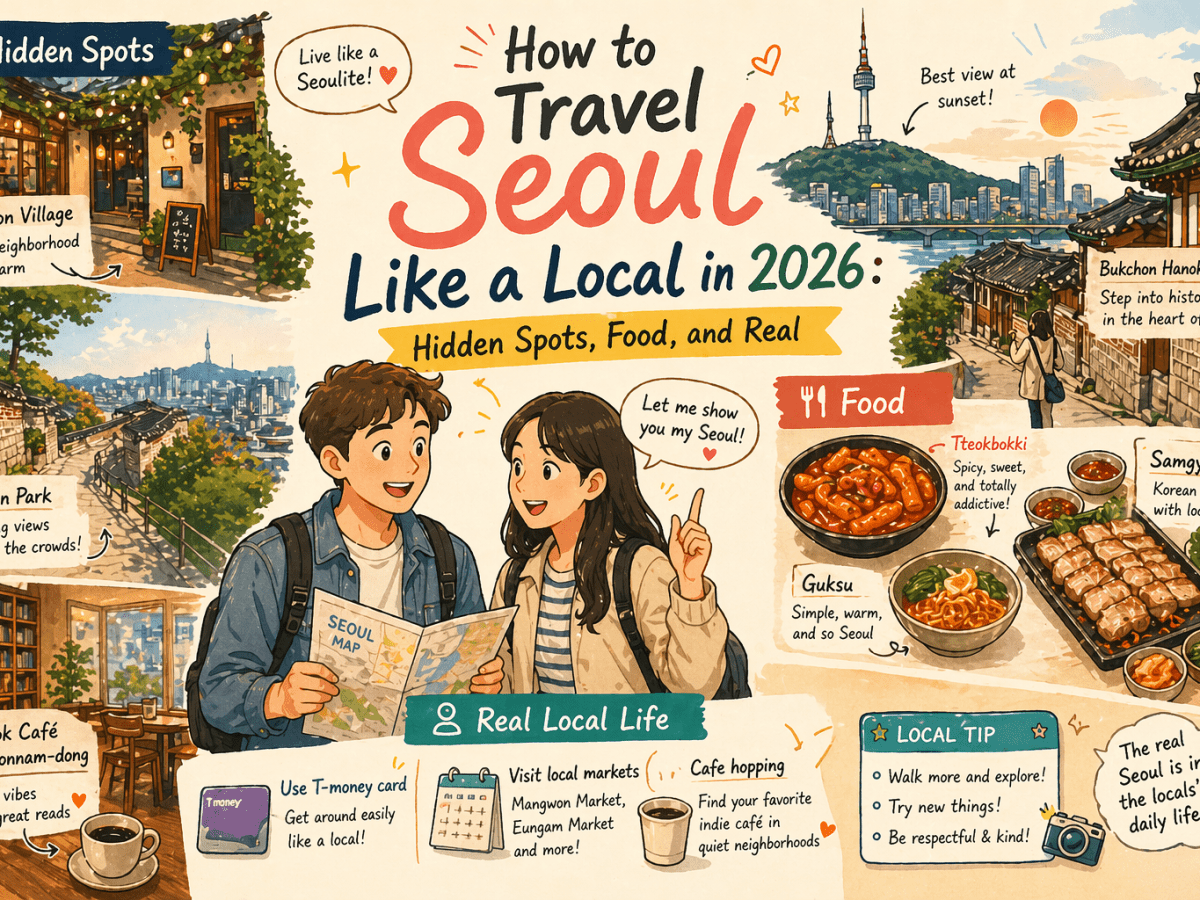
How to travel Seoul like a local is not about visiting more places—it’s about experiencing the city differently. Most first-time visitors follow the same path: famous palaces, crowded shopping streets, and viral cafés. But locals? They move slower, eat better, and know exactly where to go when they want something real.
Seoul in 2026 is a mix of ultra-modern energy and deeply rooted traditions. The key to enjoying it like a local is knowing where those two worlds meet—and how to navigate them without rushing.
This guide will show you how to experience Seoul beyond the obvious: hidden neighborhoods, authentic food spots, and the everyday habits that define local life.
What You’ll Learn:
What “Traveling Like a Local” Really Means
Traveling like a local doesn’t mean avoiding famous places completely. It means changing how you approach them—and what you prioritize.
Instead of trying to see everything in one day, locals focus on neighborhoods. They spend time in one area, walk more, sit in cafés longer, and build their day around food and atmosphere rather than landmarks.
It’s less about “checking off” places and more about “feeling” the city. That shift alone changes your entire Seoul experience.
Why Seoul Feels Different from Other Cities
Seoul moves fast—but locals don’t always follow that pace.
The city is filled with late-night culture, convenience, and hyper-efficiency. Food is available 24/7, transportation is seamless, and everything feels connected. But locals know when to slow down—whether it’s in a quiet café alley or a neighborhood market.
Another key difference is how social everything is. Eating alone is fine, but many experiences—from BBQ to drinking—are built around sharing. Understanding this helps you blend in naturally.
📌 Planning your Seoul trip? Save this guide — it’ll help you avoid the tourist traps.
Hidden Spots Locals Actually Go To
Now this is where things change. If you want to travel Seoul like a local, these are the types of places you should prioritize:
1. Ikseon-dong Alley Cafés
A maze of narrow streets filled with hanok-style cafés. It’s trendy but still feels intimate if you go early or late.
2. Mangwon-dong
A local favorite neighborhood with small bakeries, street food, and a more relaxed vibe than Hongdae.
3. Euljiro
An industrial area turned into a nightlife hotspot. Hidden bars, old buildings, and a raw, authentic atmosphere.
4. Seoul Forest
Instead of crowded parks, locals come here to relax, picnic, and slow down.
5. Local Markets (Not Just Gwangjang)
Traditional markets like Mangwon Market or Tongin Market feel more everyday and less tourist-focused.
These spots show a different side of Seoul—one that feels lived-in, not curated.
Mistakes to Avoid
1. Trying to see everything in 2 days
Seoul is a city of depth, not speed.
2. Only eating in tourist areas
You’ll miss better food at half the price.
3. Skipping convenience store culture
It’s a huge part of daily life in Korea.
4. Not learning basic etiquette
Small things like pouring drinks for others matter.
5. Ignoring neighborhood exploration
That’s where the real Seoul is.
💡 Tip: Pick 1–2 neighborhoods per day. That’s how locals move.
Tips from People Who Know Seoul
• Eat at odd hours
Avoid crowds and experience Seoul’s 24-hour culture.
• Walk more, don’t just take the subway
Some of the best spots aren’t on maps.
• Follow locals, not influencers
If a place is full of Koreans, it’s usually good.
• Try “simple meals”
Kimbap, ramen, or street toast—these are everyday favorites.
• Stay out late at least once
Seoul at night feels like a completely different city.
Quick Summary:
- Focus on neighborhoods, not landmarks
- Mix popular spots with hidden ones
- Slow down and follow local habits
You Might Also Enjoy
→ Best Korean Foods for First-Time Visitors
→ Korean Street Food Guide
→ Seoul Café Culture Explained
Closing Thoughts
Traveling Seoul like a local is less about where you go and more about how you experience it.
Slow down. Stay curious. Let the city surprise you instead of trying to control every moment.
That’s when Seoul stops being a destination—and starts feeling like a place you understand.
If you’re new to K-culture, this is the perfect place to start.