


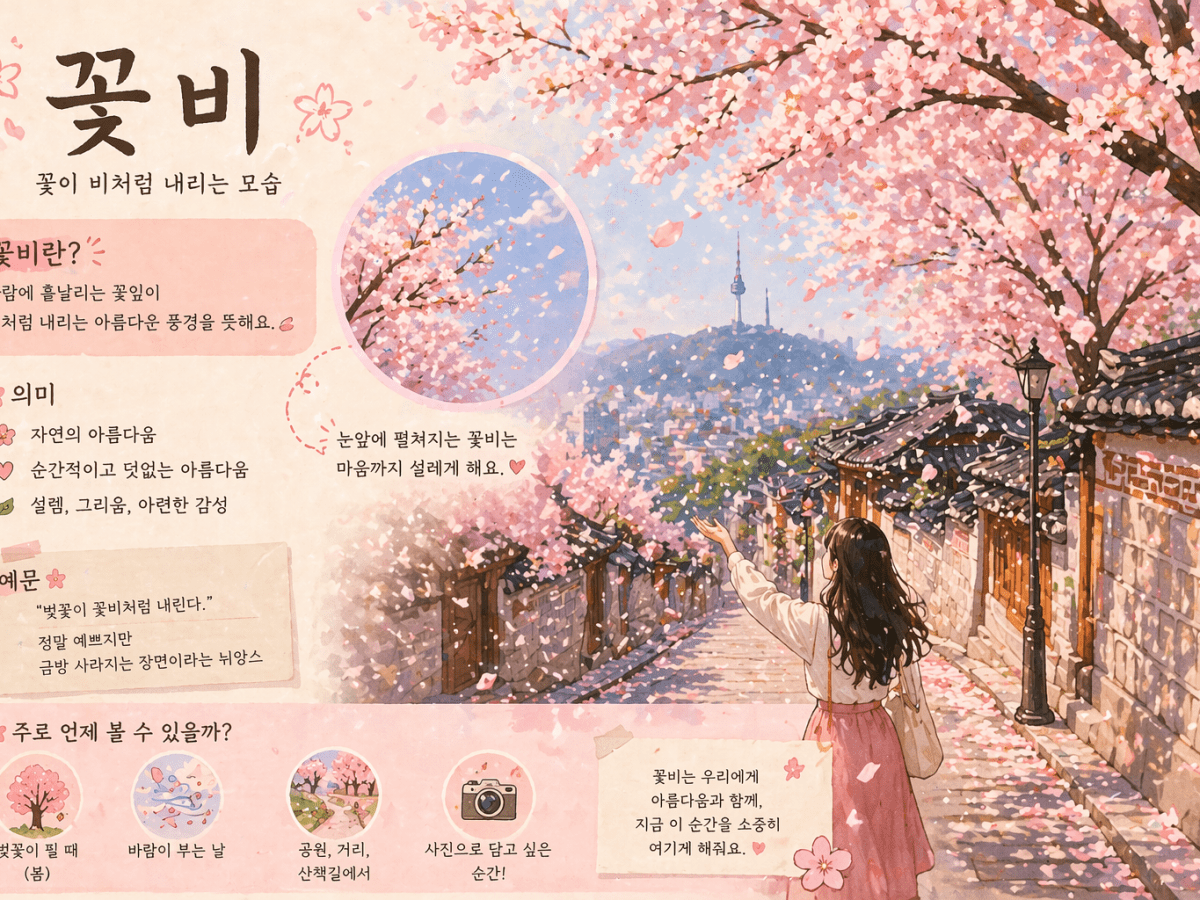
The Meaning of “Kkotbi (꽃비)” Explained: A Beautiful Korean Word You Should Know
Some words don’t just describe a moment—they make you feel it.
⏱ 6 min read
Korean word “kkotbi” meaning is one of those rare expressions that instantly creates an image in your mind. Even if you’ve never heard it before, once you understand it, it stays with you.
Korean is full of poetic words that blend nature and emotion, and “꽃비 (kkotbi)” is a perfect example. It’s simple, visual, and deeply tied to Korean culture and seasonal beauty.
In this guide, you’ll learn exactly what “kkotbi” means, why it’s special, and how Koreans actually use it in real life.
What You’ll Learn:
What Does “Kkotbi (꽃비)” Mean?
“꽃비 (kkotbi)” is a compound word made of two parts:
- 꽃 (kkot) = flower
- 비 (bi) = rain
Put together, it literally means “flower rain.”
But it doesn’t refer to actual rain. Instead, it describes the beautiful moment when flower petals—especially cherry blossoms—fall from trees like rain.
Imagine standing under cherry blossoms as petals gently fall around you. That exact scene is what “kkotbi” captures.
Why This Word Feels So Emotional
This is where things get deeper.
“Kkotbi” is not just a visual word—it carries emotion. In Korean culture, falling petals often symbolize something temporary and fleeting. Beauty that doesn’t last forever.
That’s why the word can feel a little nostalgic, even slightly sad. It’s beautiful, but you know it will be gone soon.
This emotional layer is what makes Korean vocabulary unique. A single word can describe both a scene and a feeling at the same time.
📌 Learning Korean? Save this word — it’s one of the most beautiful expressions you’ll come across.
When Koreans Use This Word
“Kkotbi” is most commonly used in spring, especially during cherry blossom season.
You might hear it when people describe:
- Cherry blossom petals falling in the wind
- Romantic spring scenes
- Moments captured in photos or videos
It also appears in poems, songs, and captions on social media because it sounds soft and emotional.
However, it’s not used in everyday casual conversation all the time. It’s more poetic than practical.
Mistakes to Avoid
1. Taking it too literally
It’s not actual rain—it’s a metaphor.
2. Using it in formal situations
It’s better suited for emotional or descriptive contexts.
3. Overusing it
Because it’s poetic, using it too often can feel unnatural.
4. Ignoring context
It works best when describing a visual scene.
5. Mispronouncing it
It should sound like “kkot-bi,” with a soft but clear “t” sound.
💡 Tip: Think of it as a “poetry word,” not a daily vocabulary word.
How to Use “Kkotbi” Naturally
Here are some natural ways to use it:
• 꽃비가 내린다
“Flower rain is falling” (petals are falling beautifully)
• 꽃비처럼 흩날리는 벚꽃
“Cherry blossoms scattering like flower rain”
• 오늘은 꽃비가 정말 예쁘다
“Today, the falling petals are really beautiful”
These expressions are often used in captions, poems, or romantic descriptions rather than daily speech.
Quick Summary:
- “Kkotbi” = flower rain (falling petals)
- Used mainly in spring and poetic contexts
- Combines visual beauty with emotional meaning
You Might Also Enjoy
→ Beautiful Korean Words You Should Know
→ Korean Language Beginner Guide
→ Korean Culture Explained for Beginners
Closing Thoughts
“Kkotbi” is a small word, but it captures a very big feeling.
It reminds you that some of the most beautiful moments are also the most temporary.
And that’s exactly what makes them special.
If you’re exploring Korean language and culture, this is the kind of word that makes the journey unforgettable.