


⏱ 9 min read
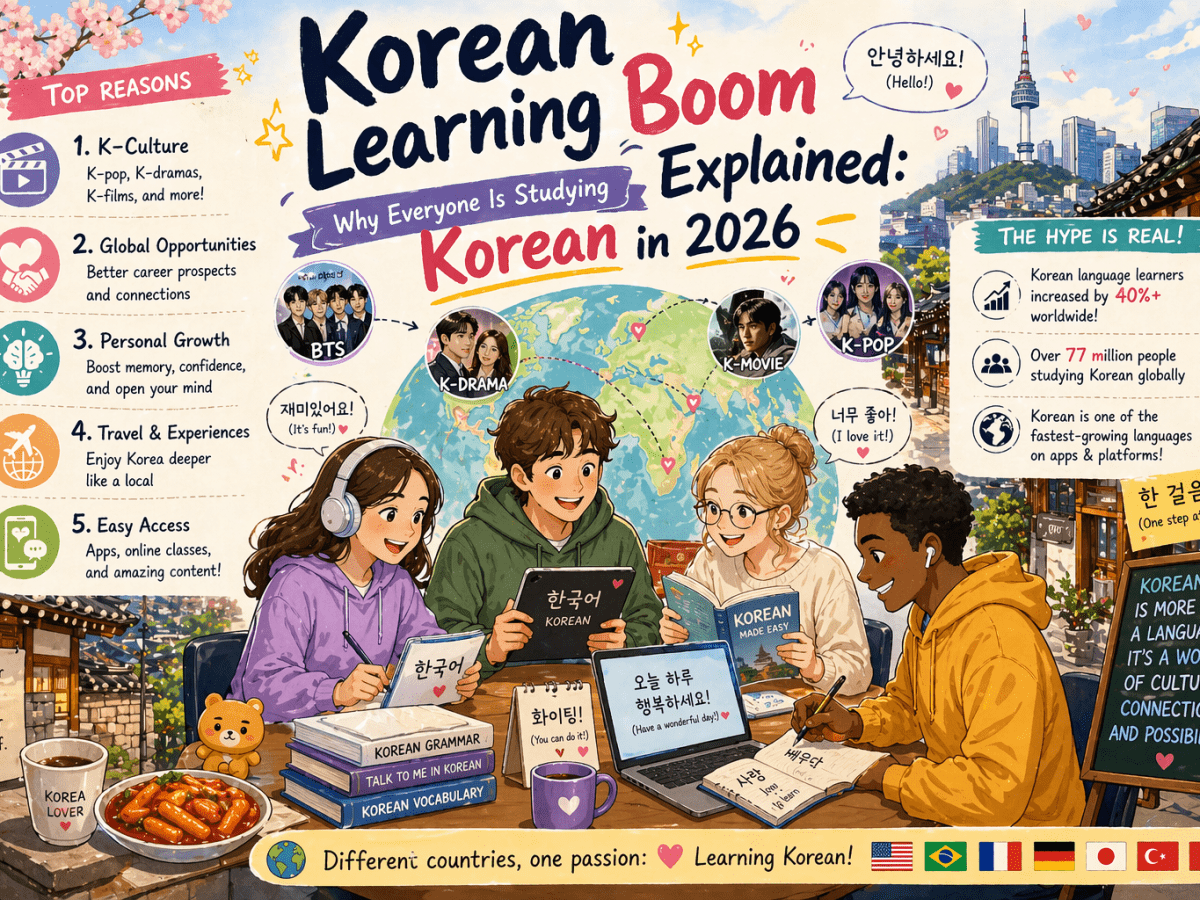
Korean learning boom explained starts with a simple observation: more people than ever are studying Korean—and not just casually. From language apps to university programs, Korean has rapidly climbed the ranks as one of the most popular languages to learn worldwide.
But why now? What changed? And why are people sticking with Korean instead of dropping it like many other “trend” languages?
This guide breaks it down clearly—from cultural influence to real-world benefits—so you understand not just the trend, but the deeper reasons behind it.
What You’ll Learn:
What Is the Korean Learning Boom?
The Korean learning boom refers to the rapid global increase in people studying the Korean language, especially since the late 2010s—and accelerating into 2026.
What makes this different from past language trends is consistency. This isn’t a short-lived spike. Year after year, more learners are joining, and more institutions are supporting Korean education.
It’s no longer limited to fans of Korean culture. Students, professionals, travelers, and even entrepreneurs are now actively learning Korean for practical reasons.
Why Korean Became So Popular
At first glance, the answer seems obvious: K-pop, K-dramas, and Korean films. But the real reason goes deeper.
Korean culture doesn’t just entertain—it creates emotional connection. When people watch dramas or listen to music, they want to understand the language behind it. Subtitles are no longer enough.
Another major factor is accessibility. Korean uses Hangul, an alphabet that is logical and relatively easy to learn compared to many other writing systems. This lowers the entry barrier significantly.
There’s also a growing interest in Korea as a country: tourism, food, beauty, and even career opportunities. Learning the language becomes a gateway into all of it.
📌 Thinking about learning Korean? Save this guide — it’ll give you a clearer starting point.
How People Are Learning Korean Today
The way people learn Korean in 2026 is very different from traditional methods.
1. Apps and Online Platforms
Apps like Duolingo, Talk To Me In Korean, and YouTube channels make learning flexible and accessible anytime.
2. Content-Based Learning
Many learners use K-dramas, variety shows, and music as learning tools. This makes the process more engaging and less like “studying.”
3. Community Learning
Online communities, language exchange apps, and study groups help learners stay motivated and consistent.
4. Formal Education
Universities and language schools worldwide are expanding Korean programs due to rising demand.
This mix of structured and casual learning is one of the key reasons the trend continues to grow.
Common Mistakes to Avoid
1. Focusing only on vocabulary
Without grammar, progress becomes limited.
2. Expecting fast results
Korean takes time, especially sentence structure.
3. Ignoring pronunciation
Correct sounds are essential early on.
4. Studying without context
Language makes more sense when tied to real content.
5. Learning alone with no feedback
Interaction speeds up improvement.
💡 Tip: Combine structured study with real-life content for faster progress.
Tips to Learn Korean Faster
• Learn Hangul first
You can master it in a few hours, and it changes everything.
• Use Korean daily
Even small exposure builds familiarity.
• Watch with subtitles strategically
Start with English, then switch to Korean.
• Practice speaking early
Don’t wait until you feel “ready.”
• Stay consistent
Short daily sessions are better than long, irregular ones.
Quick Summary:
- Korean is growing globally, not just a trend
- Culture + accessibility = key drivers
- Modern learning methods make it easier than ever
You Might Also Enjoy
→ Korean Culture Beginner Guide
→ Best K-Dramas for Language Learners
→ How to Travel Korea Without Speaking Korean
Closing Thoughts
The Korean learning boom isn’t happening by accident. It’s the result of culture, accessibility, and genuine interest coming together at the right time.
What started as curiosity is turning into long-term commitment for millions of learners.
If you’ve been thinking about learning Korean, there has never been a better time to start.
If you’re new to K-culture, this is the perfect place to start.