

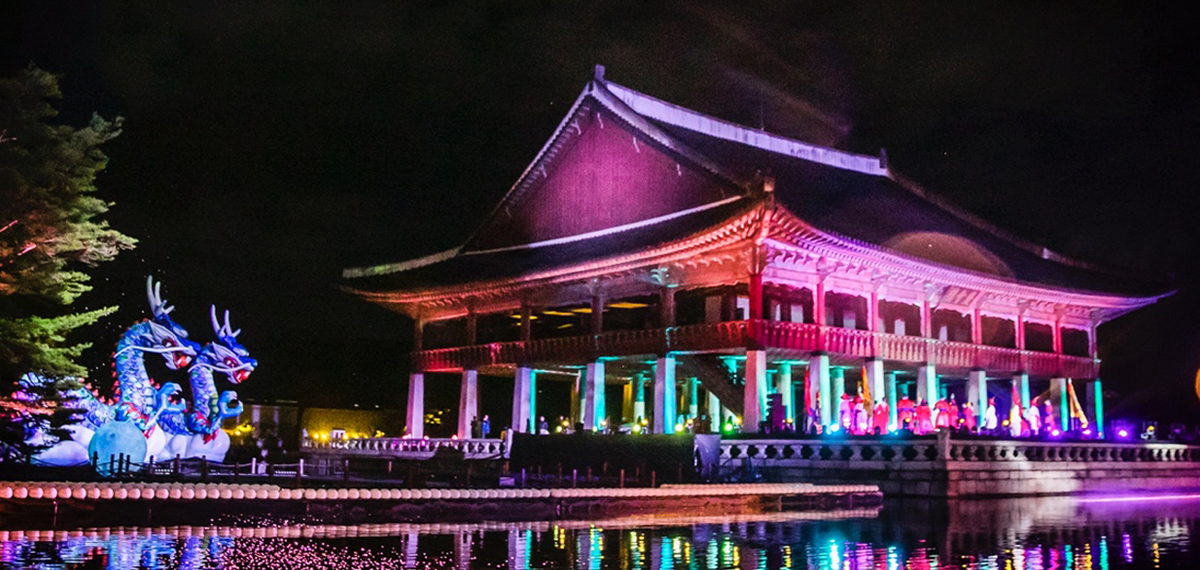
On April 24, 300 international visitors will enter Gyeongbok Palace for a free opening performance that blends traditional dance, media facades, a hanbok fashion show, gugak, and EDM. The spring festival then runs for nine days from April 25 across five palaces in Seoul and Jongmyo Shrine.
Not a museum visit.
A living stage.
K-Royal Culture Festival: Where Tradition Learns to Travel
The K-Royal Culture Festival is now in its 12th edition, and that matters because it shows this is no longer a niche heritage event. It is a national cultural format that keeps expanding, refining, and reaching outward. Last year’s spring and fall festivals drew a record 1.37 million visitors combined.
The festival’s core idea is simple, but powerful: bring people into Korea’s royal spaces and let them experience the country’s cultural memory in motion. That means performances, hands-on programs, guided tours, palace nights, ritual music, food, and architecture — all in the same ecosystem. The event moves across Gyeongbok, Deoksu, Changdeok, Changgyeong, and Gyeonghui Palaces, plus Jongmyo Shrine.
Most heritage festivals treat the past like glass. This one treats it like a stage.
How the K-Royal Culture Festival Looks in Korea Today
This year’s edition is unusually ambitious for foreign visitors. Organizers expanded foreign-targeted programs from 10 to 12 across the spring and fall editions, added an English SNS account, placed foreign guides on site, and installed QR codes throughout the palaces so visitors can access English program information and benefits instantly.
The spring program lineup makes that strategy visible. On April 24, the opening ceremony at Gyeongbok Palace will accommodate 300 international visitors for free, and all reservation-required programs — including the opening ceremony — have already sold out. Two of the six spring programs for foreigners are new: the “Royal Ancestral Ritual Music Nighttime Performance at Jongmyo Shrine” and “The Dance of Crown Prince Hyomyeong and the Moon.”
That is the new Korea culture formula.
One foot in the archive. One foot in the now.
Art director Yang Jeong-woong captured that idea literally. He described the opening stage with a question: “What if a spaceship descended on Gyeongbok Palace?” His answer was a spaceshiplike circular stage in Heungnyemun’s courtyard — a rare shape in a palace setting — under the theme “Hyper Palace.”
It is easy to call that playful. It is more accurate to call it strategic.
Why the World Is Paying Attention
The K-Royal Culture Festival is drawing attention because Korean heritage is no longer being treated as background. It is becoming part of the main story. The Korea Heritage Agency said it is responding to a surge in global interest in Korean heritage, and the agency hopes to lift attendance by 20 percent this year after last year’s 1.37 million-visitor total.
There is also a wider spillover effect. Huh Min, director of the Korea Heritage Service, said that after BTS performed at Gwanghwamun Square on March 21, Gyeongbok Palace drew 33,000 visitors the next day and 53,000 the following Saturday. In other words, heritage is no longer competing with pop culture — it is traveling with it.
That is why this festival feels bigger than a seasonal program. It is a signal. Korea is not only exporting style, music, and screen culture. It is also exporting the experience of being inside its history, not just looking at it from outside.
If you want the official program details for foreign visitors, see the festival coverage from Korea JoongAng Daily and the later report on palace staging and sold-out reservations at Korea JoongAng Daily.
How Readers Can Experience the K-Royal Culture Festival
You do not need to be an expert in Korean history to feel the appeal of the K-Royal Culture Festival. You only need curiosity — and a reservation. The most accessible spring program is the free April 24 performance for 300 international visitors at Gyeongbok Palace. Other options include English-language nighttime tours at Changdeok Palace from April 28 to 30, a palace architecture walk at Changdeok for 40 foreign visitors per session at 10,000 won, and a royal banquet food-tasting program at Deoksu Palace from May 1 to 3 for 20 participants per session at 15,000 won.
The Jongmyo side of the festival is equally compelling. The Jongmyo Daeje, the UNESCO-recognized royal ancestral rite, takes place on May 3, with a 2.6-kilometer royal parade from Gyeongbok Palace to Gwanghwamun and then to the shrine. The event will also be livestreamed, and a separate week of festivities called Jongmo Week runs from April 25 to May 3 with pre-events at the shrine.
How to approach it like a traveler:
- Book early, because reservation-only programs are already sold out.
- Choose one free performance and one paid experience so you feel both scale and intimacy.
- Use the English guides and QR codes, which are now part of the festival experience itself.
That balance is what makes the K-Royal Culture Festival compelling: it is ceremonial, but never frozen; traditional, but never timid.
📌 You might also enjoy:
→ Why Changdeok Palace feels like Seoul’s most intimate royal space
→ How Korean heritage became a global lifestyle trend
→ Why Seoul’s palace nights are becoming the city’s hottest tickets
Frequently Asked Questions
What is the K-Royal Culture Festival?
The K-Royal Culture Festival is Korea’s biannual palace-and-shrine heritage event, now in its 12th edition, featuring performances, tours, food, and hands-on cultural programs across five palaces and Jongmyo Shrine.
When does the K-Royal Culture Festival open?
The spring edition opens on April 25, with a free international performance at Gyeongbok Palace on April 24 and nine days of events across Seoul’s royal heritage sites.
How can visitors experience the K-Royal Culture Festival?
Visitors can reserve foreigner-friendly programs such as English palace tours, architecture walks, food tastings, or the Jongmyo-related performances. Some programs are free, others charge 10,000 to 15,000 won per person.
Korean culture is not standing still in the palace.
It is walking back out to meet the world.
If you’re new to K-pop, this is the perfect moment to start exploring.